
CRI Lighting Explained – Why Light Quality Matters in Modern Homes
Understanding CRI is essential for achieving the best lighting in your home. Lighting with a CRI of 90+ or 97+ ensures natural colors, greater comfort, and a more cohesive atmosphere—especially in kitchens, living rooms, and dining areas.
What is CRI—and why is it important?
When discussing high-end and professional lighting, the term CRI (Color Rendering Index) often comes up. It is one of the most important factors for good home lighting.
CRI measures how accurately a light source renders colors compared to natural light. The scale ranges from 0 to 100, where CRI 100 corresponds to perfect color rendering, similar to that of traditional incandescent bulbs.
Why CRI Is Essential in the Home
In modern homes, lighting isn’t just about function—it influences how materials, colors, and textures are perceived. Low-quality lighting (CRI 80 or lower) can make rooms appear flat and artificial.
High CRI:
Enhances the natural tones of wood, stone, and textiles
Makes food look fresh and appetizing
Ensures natural skin tones
In residential settings, a minimum CRI of 90+ should be selected, while a CRI of 95+ is preferable in rooms where quality is a priority.
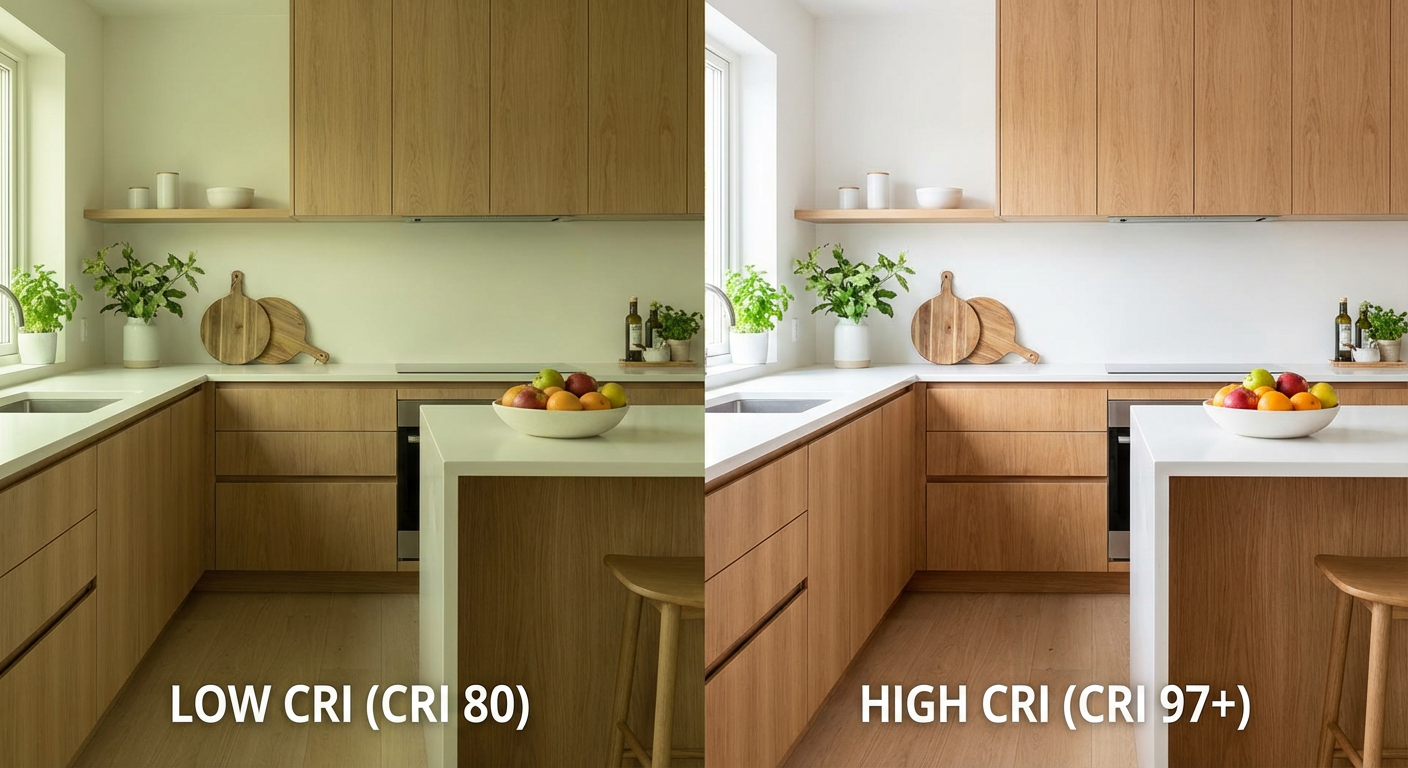
CRI90 vs. CRI97+ – a noticeable difference
CRI90 is good, but the difference compared to CRI97+ is clear.
For CRI97+:
Colors appear more vivid
Contrast and depth are improved
The light feels more natural
At Aluxia by Lumega , we work with CRI97+, close to incandescent bulbs (CRI99), combined with modern LED efficiency.

Where does a high CRI make the biggest difference?
A high CRI is particularly important in:
Kitchen – accurate depiction of food and materials
Dining areas – natural presentation
Living Room – A Better Experience of Materials
Bathroom – natural skin tones
Lighting quality as a design element
CRI should always be a part of the lighting design. It’s not just about brightness, but about the experience of the space.
High-quality lighting elevates a home from functional to stylish.